Your self-hosted media server
WebRTC + RTMP + HLS + recording, all self-hosted
StreamHub is a management layer on top of LiveKit: sub-second WebRTC, multi-protocol ingest, live HLS, recording to your own S3, and a lightweight drop-in JavaScript SDK to publish and subscribe over WebRTC. Multi-tenant, with signed webhooks and observability.
Stop building apps around a media server — start with the media server and build apps on top.
$ curl -fsSL https://www.streamhub.studio/install.sh | sudo bash
One-liner install · Ubuntu 24.04 / 26.04 · Debian 12 / 13 · what it provisions →
- WebRTC
- RTMP
- RTMPS
- SRT
- WHIP
- RTSP
- HLS
The open-source (AGPL) alternative to Ant Media Enterprise — 0.19s p50 WebRTC measured in production, signed webhooks and a drop-in SDK to migrate without a rewrite. See the head-to-head →
Open source · self-hostable · …or we host it for you
Built for teams like these
The same self-hosted stack fits broadcasters, city camera networks, streaming platforms and public-sector operators.
-
National Broadcaster
-
City CCTV Network
-
LatAm Streaming Platform
-
Public-Sector Agency
-
Sports Production House
-
Online Radio Network
One server, four verticals ready to go
The same building blocks — multi-protocol ingest, sub-second WebRTC, recording to your S3, plugins — combined into setups already running on StreamHub.
CCTV / video surveillance
Plug IP cameras and NVRs in over RTSP, watch everything from a multi-camera cockpit and let the vision plugins raise the events.
- RTSP relay into WebRTC rooms — sub-second, not 6s of HLS
- AI plugins: YOLO detection, license plates (LPR), people counting, perimeter intrusion, presence, PPE
- CCTV cockpit from the marketplace: multi-camera wall
- 24/7 recording split into N-minute MP4 parts in your S3
- StreamHub Agent: turn any on-prem Linux box into a camera gateway
Live shopping
Sell live at conversation latency, with interaction built in and embedded right in your store.
- 0.19s WebRTC player: the "buy now" lands on time
- Chat, reactions and a live viewer count included
- Public /embed iframe for your e-commerce
- Signed webhooks drive your backend (stream_started, vod_ready)
Telemedicine
Video consultations on your own infrastructure: patient data never leaves your S3.
- Private 1:1 rooms with mic, camera and screen share
- Ephemeral per-room tokens: nobody joins without one
- Self-hosted = real data sovereignty (your infra, your S3)
- Consent-based recording to your bucket, VOD ready
Online radio
Stations and voice rooms without video: one host publishes, listeners tune in with a public link.
- Audio-only rooms, Discord-style
- Radio mode: hidden, subscribe-only listeners
- Public listen-token to embed the player anywhere
- Radio plugin from the marketplace
Your backoffice, live
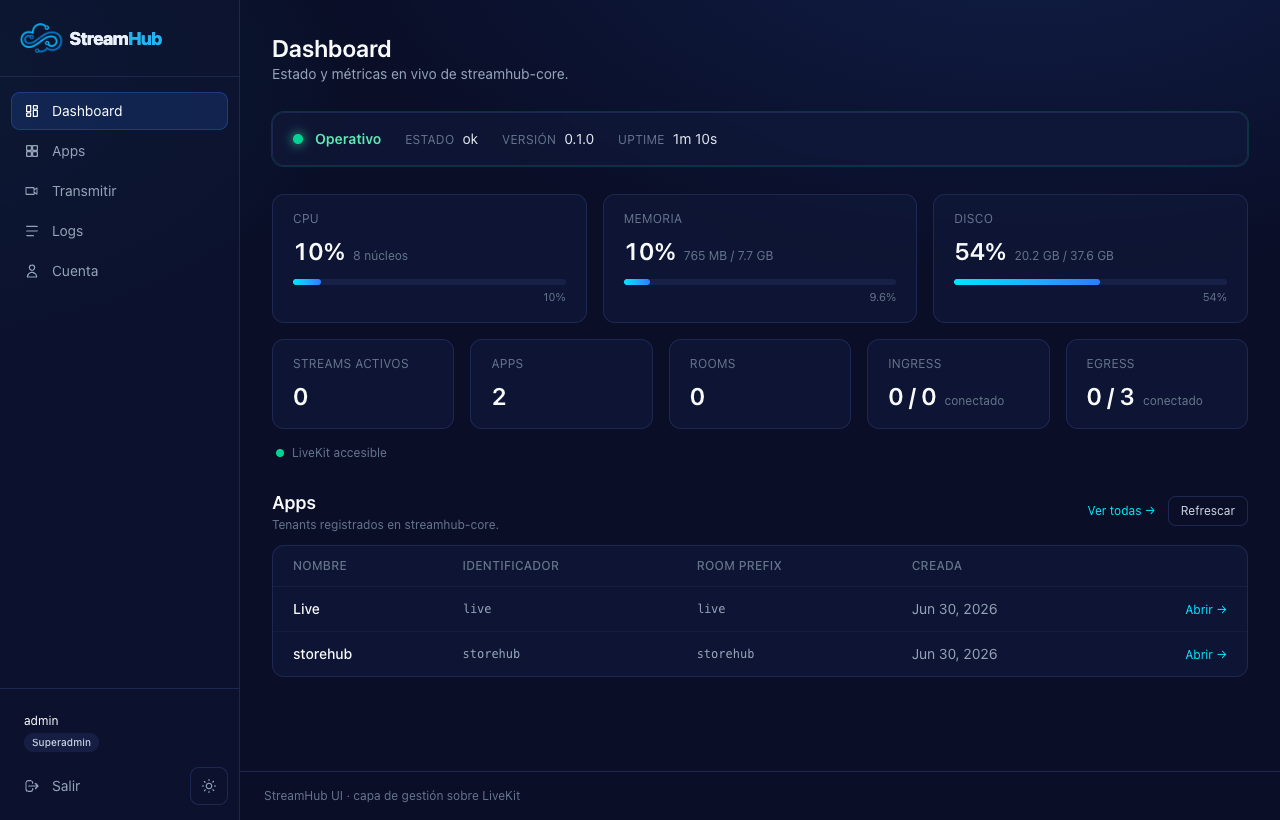
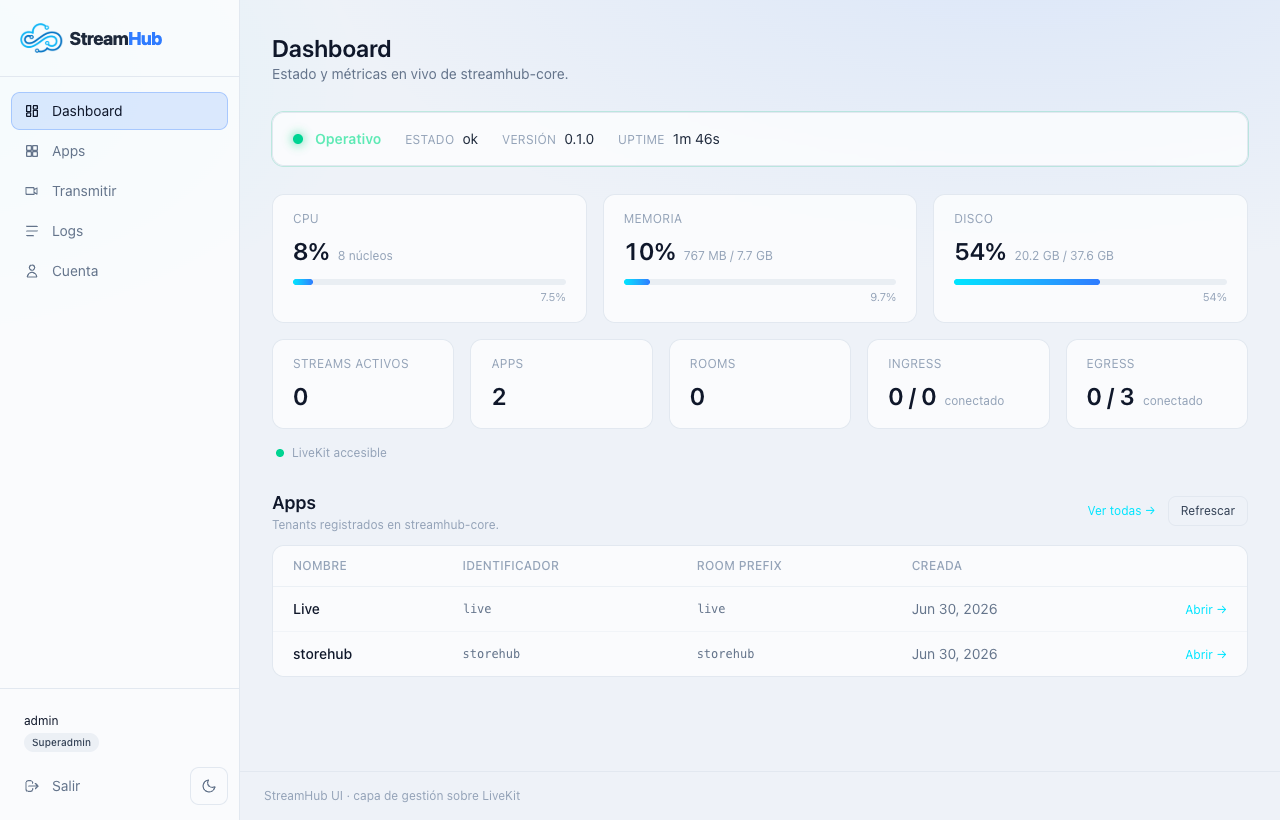
Real screenshots of the StreamHub backoffice. One place for your apps, streams, recordings, tokens and webhooks — running on LiveKit.


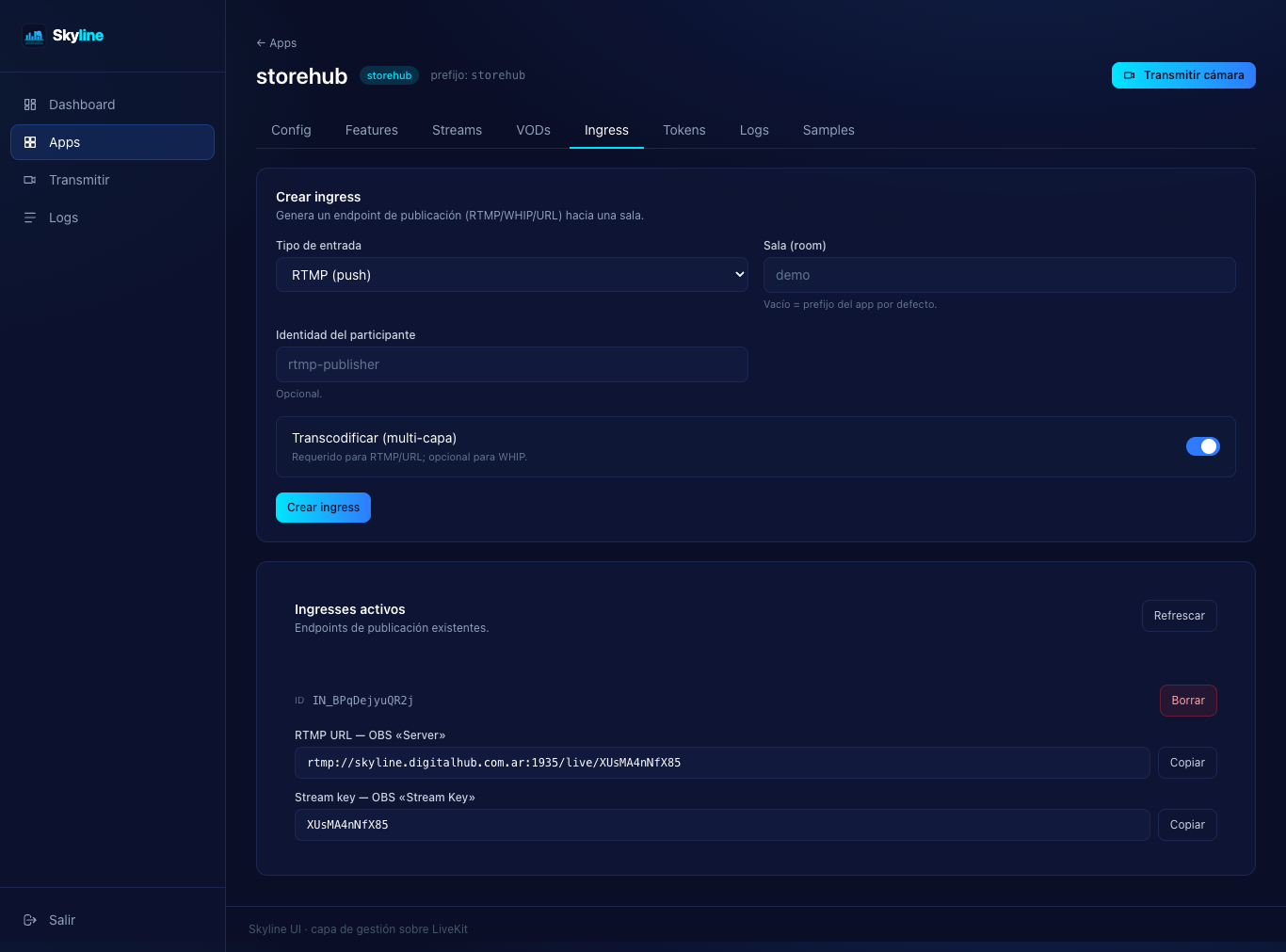
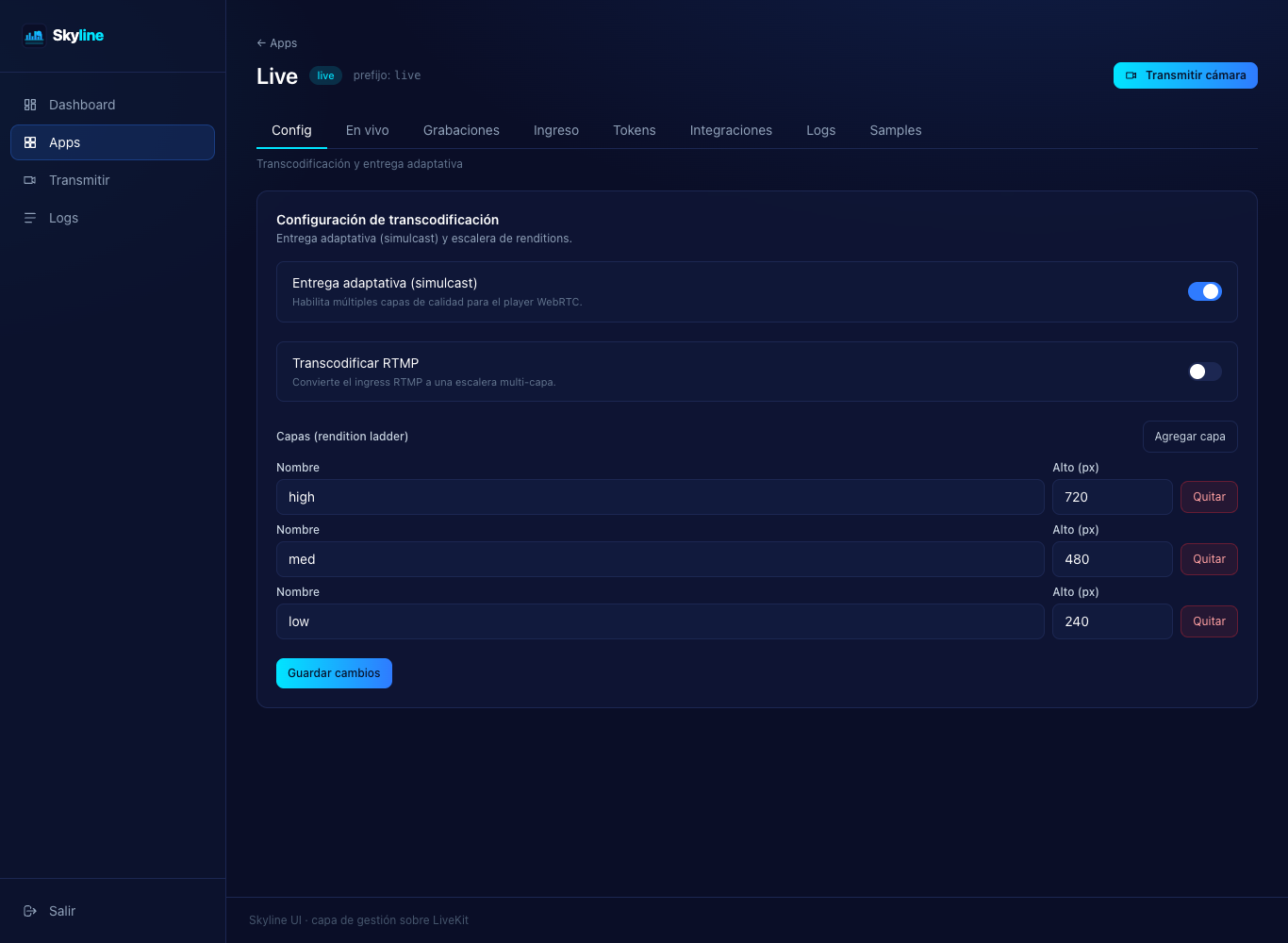
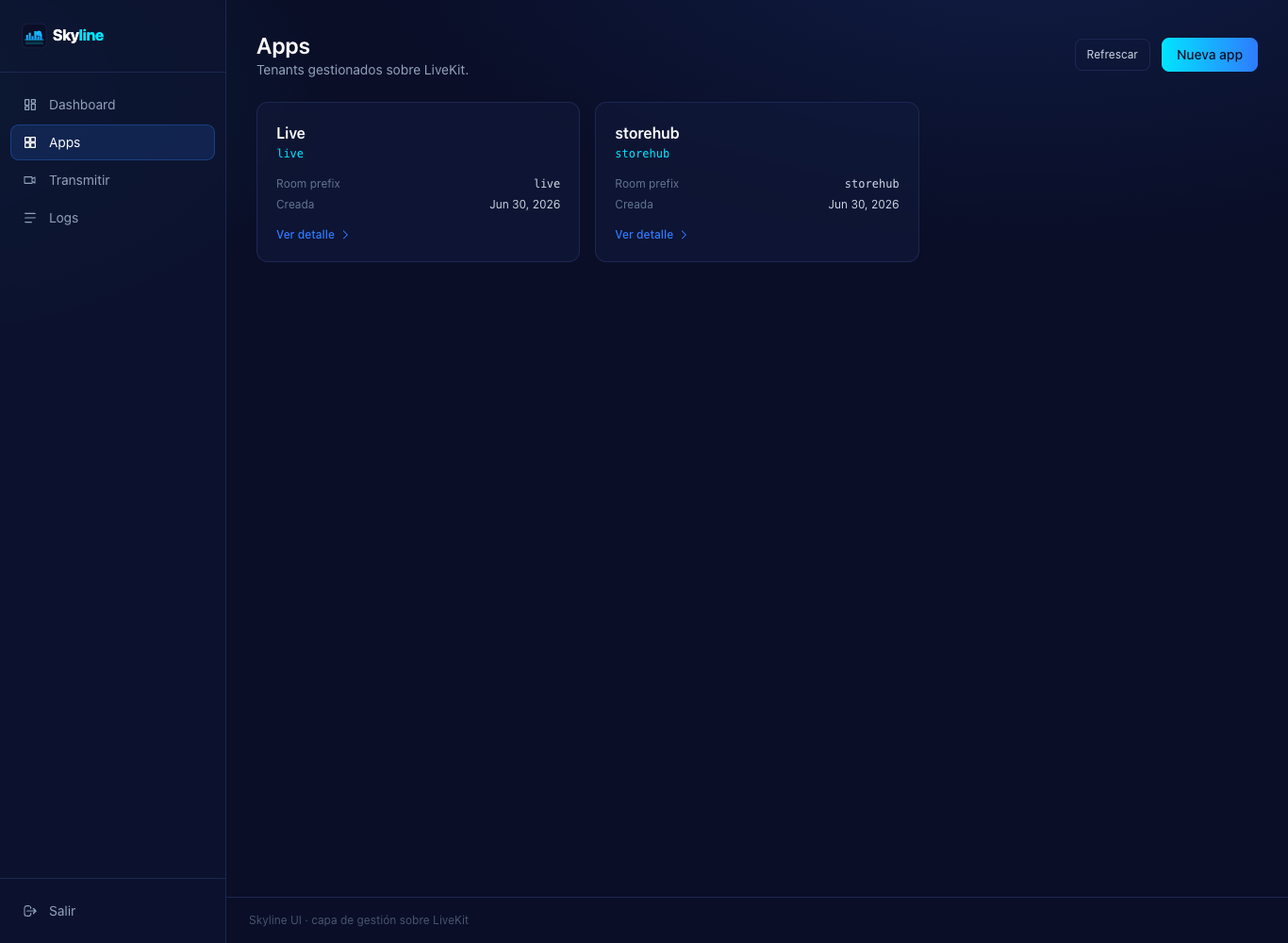

Real-time dashboard
Core status at a glance: live CPU, memory and disk, active streams, registered apps and ingress/egress connections. Plus per-app boards, a cluster view and 30-day logs — no SSH needed.
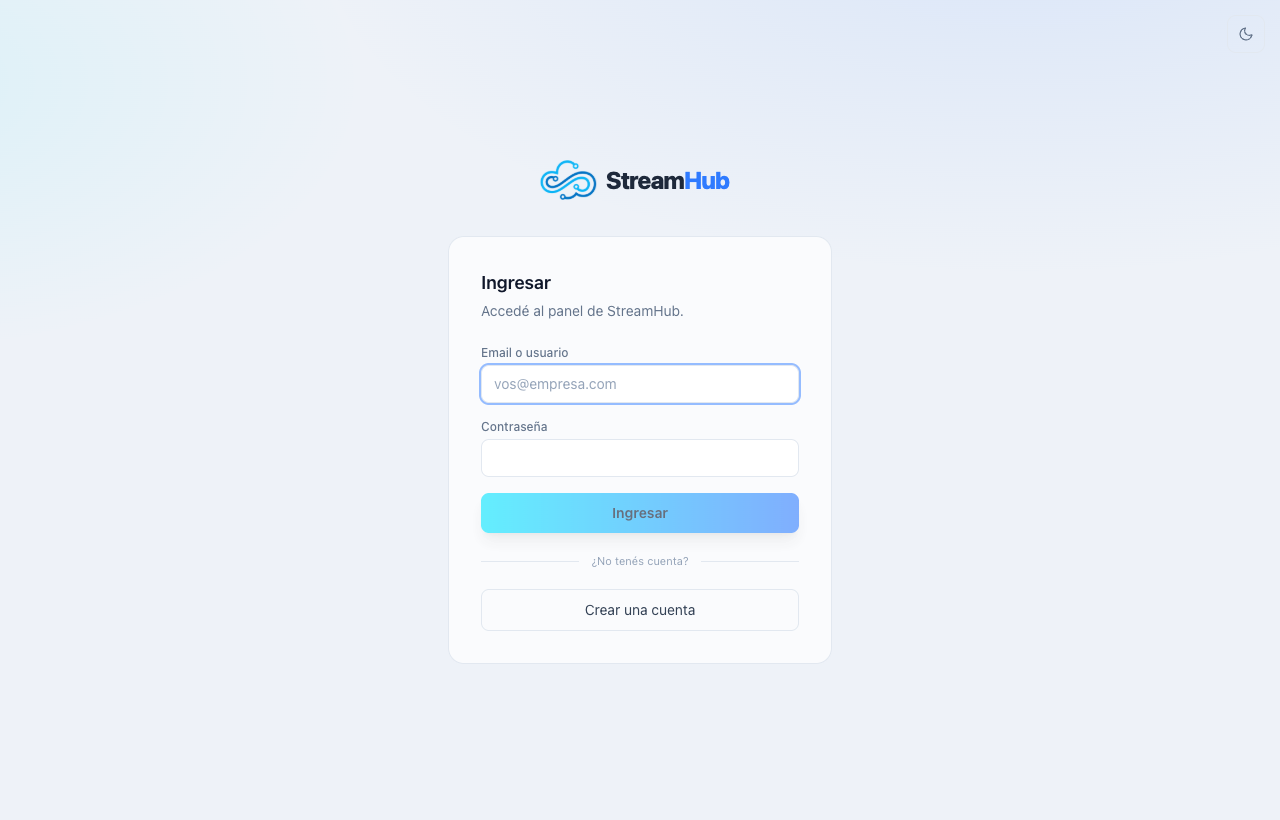
Light or dark, your call — the whole backoffice is themed.
How it works
From zero to on-air in three steps.
Create an app
Each app is an isolated tenant: its own room prefix, S3 bucket, tokens and quotas. Ready in seconds from the backoffice.
Publish
Push your feed over RTMP, WHIP, RTSP or straight from the webcam. Copy the URL and stream key into OBS and go live.
Watch, record and embed
Sub-second WebRTC or HLS, recording to your own S3 (VOD + snapshots) and embeddable players via public link or iframe.
Curious how the signal actually travels? See the architecture, animated
Try it with your own streams
We're in beta and it's free. Open source and self-hostable — or we host it for you.
Your CCTV cameras, cloud-connected and AI-analyzed
A tiny C binary for cameras and edge devices: it pulls the RTSP feed and streams it to your StreamHub, where YOLO detection and privacy masking run remotely. No GPU on the edge — one command and the camera is live.
$ curl -fsSL https://streamhub.studio/agent.sh | sh
From dusty DVR to live AI-annotated stream, in the time it takes to paste one command.
The software is free. You only pay if we host it.
StreamHub core and all plugins are open source (AGPL) — self-host on your own servers forever, at no cost and with no feature gates. The plans below are for managed infrastructure: we provision, operate, monitor, back up and upgrade a dedicated cluster for you.
Self-hosted — free forever
Full product, every plugin, unlimited streams. One-line installer on Ubuntu or Debian. No trial windows, no seat counts, no license keys.
Install it yourselfManaged — we run it for you
Same software, on dedicated infrastructure we operate: provisioning, TLS, monitoring, backups, upgrades and support. Pay for the infra and the ops — never for the software.
Start a free trialFrom a bare Ubuntu or Debian box to on-air in one command
The hosted installer provisions the whole stack on a clean Ubuntu or Debian server: Docker, LiveKit, ingress/egress, the StreamHub core, nginx with TLS certificates and a seeded API token. Idempotent — re-running upgrades in place and never rotates your secrets.
$ curl -fsSL https://www.streamhub.studio/install.sh | sudo bash
$ curl -fsSL https://www.streamhub.studio/install.sh | sudo bash -s -- \
  --join --cluster-token <token> --origin-ip <ip>
- Ubuntu 24.04 / 26.04 LTS · Debian 12 / 13, x86_64
- Node 24 runtime, Docker Compose stack
- Idempotent: re-run to upgrade, secrets preserved
- --non-interactive for CI and cloud-init
- TLS via nginx + certbot (or --proxy caddy)
Get started today: open source or managed
StreamHub is 100% open source (AGPL) and self-hostable — or, if you'd rather not run it, we host it for you. We're in beta, so you can try it free while we keep polishing.
Self-host it
One command installs a full node on Ubuntu or Debian — your own media server on LiveKit. Recording to your S3, your apps, your rules. No lock-in.
- curl | sudo bash installer (Ubuntu · Debian 12/13)
- Your infra, your S3
- Webhooks + SDK included
We run it for you
Don't want to operate the infra? We hand you StreamHub managed, updated and monitored. You focus on streaming.
- Zero DevOps
- Updates and monitoring
- Guided onboarding
Let's talk about your stream
Tell us your use case — low-latency WebRTC, RTMP/WHIP/RTSP ingest, recording to your own S3, restreaming to YouTube/Twitch or multi-tenant. We'll help you get going, self-hosted or managed.
-
Start in minutes
Start a free trial — nothing to install.
-
Your data, your S3
Recordings and VOD in your own bucket.
-
Log in to your account
Magic-link sign-in — no password.
Write to us
Questions, a use case, or want us to host it? Tell us.